Lifecycle Wooden Tray by Naturally Inspired Play
Invite children to slow down, observe, and wonder with the Lifecycle Wooden Tray by Naturally Inspired Play—a beautifully simple provocation for nature play, early science, and inquiry-based learning. Handcrafted in Canada from durable cedar wood and designed exclusively for Scholar’s Choice, this round wooden tray features four circular indents connected by a subtle circular flow (shown by engraved arrows), making it ideal for sorting, sequencing, and exploring how living things change over time.
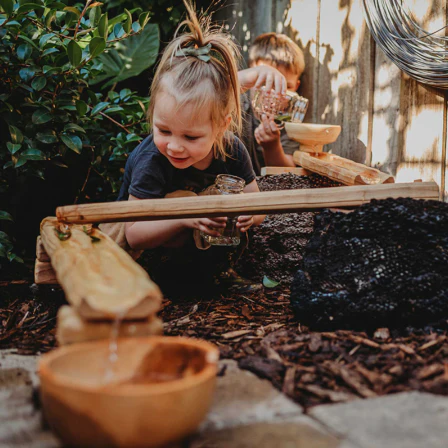
Perfect for outdoor classrooms, mud kitchens, loose parts shelves, and nature tables, the Lifecycle Tray supports hands-on learning as children gather treasures from the world around them—buds, petals, seeds, stones, pinecones, feathers, or found “signs of the season.” The four sections naturally prompt children to organize their discoveries into meaningful groups, patterns, or stages, building early STEM thinking through play.
In early years settings, lifecycle learning is most powerful when it’s tactile and child-led. Use this tray to explore the lifecycle of a plant (seed → sprout → bud → flower), insects (egg → larva → pupa → adult with matching figures), frogs, butterflies, or even seasonal change. Children can also use it as a storytelling tool—moving objects through each stage and narrating what happens next—supporting oral language, sequencing, and dramatic play alongside science concepts.
Play-based usage ideas (science + nature play)
- Plant lifecycle invitation: add real seeds, a sprout photo card, a bud, and a flower (or loose parts that represent each stage).
- Butterfly or frog lifecycle: pair with lifecycle figurines, picture cards, or small world animals.
- Nature sorting + classification: sort by texture (smooth/rough), type (seed/leaf/stone), or colour shades found outdoors.
- Seasonal change tray: winter → spring → summer → fall with natural loose parts (snowy stones, blossoms, shells, leaves).
- Observation + inquiry prompt: place a magnifier beside the tray and invite children to describe, compare, and hypothesize.
- Mud kitchen “recipe” stages: mix-and-make play—ingredients → stir → serve → decorate—supporting process thinking.
Key features
- Four circles for collecting, sorting, and sequencing materials
- Engraved arrows encourage circular thinking, cycles, and progression
- Handcrafted from durable cedar wood with a smooth, natural finish
- Open-ended design for science, nature play, loose parts, and dramatic play
- Designed exclusively for Scholar’s Choice by Naturally Inspired Play
- Made in Canada
Benefits for early childhood development
This tray supports early science and STEM skills as children observe changes, make comparisons, sort and classify, and practise early cause-and-effect thinking. It strengthens cognitive development through sequencing and patterning, builds language and communication as children describe what they notice, and encourages fine motor development as they pick up, place, and arrange small objects. Best of all, it nurtures curiosity—inviting children to ask questions like “What comes next?” and “How do we know it’s changing?”
Specifications
- Product: Lifecycle Wooden Tray by Naturally Inspired Play
- Dimensions: L 8" × W 8" × H 0.75"
- Material: Cedar wood
- Made in: Canada
Invite children to slow down, observe, and wonder with the Lifecycle Wooden Tray by Naturally Inspired Play—a beautifully simple provocation for nature play, early science, and inquiry-based learning. Handcrafted in Canada from durable cedar wood and designed exclusively for Scholar’s Choice, this round wooden tray features four circular indents connected by a subtle circular flow (shown by engraved arrows), making it ideal for sorting, sequencing, and exploring how living things change over time.
Perfect for outdoor classrooms, mud kitchens, loose parts shelves, and nature tables, the Lifecycle Tray supports hands-on learning as children gather treasures from the world around them—buds, petals, seeds, stones, pinecones, feathers, or found “signs of the season.” The four sections naturally prompt children to organize their discoveries into meaningful groups, patterns, or stages, building early STEM thinking through play.
In early years settings, lifecycle learning is most powerful when it’s tactile and child-led. Use this tray to explore the lifecycle of a plant (seed → sprout → bud → flower), insects (egg → larva → pupa → adult with matching figures), frogs, butterflies, or even seasonal change. Children can also use it as a storytelling tool—moving objects through each stage and narrating what happens next—supporting oral language, sequencing, and dramatic play alongside science concepts.
Play-based usage ideas (science + nature play)
- Plant lifecycle invitation: add real seeds, a sprout photo card, a bud, and a flower (or loose parts that represent each stage).
- Butterfly or frog lifecycle: pair with lifecycle figurines, picture cards, or small world animals.
- Nature sorting + classification: sort by texture (smooth/rough), type (seed/leaf/stone), or colour shades found outdoors.
- Seasonal change tray: winter → spring → summer → fall with natural loose parts (snowy stones, blossoms, shells, leaves).
- Observation + inquiry prompt: place a magnifier beside the tray and invite children to describe, compare, and hypothesize.
- Mud kitchen “recipe” stages: mix-and-make play—ingredients → stir → serve → decorate—supporting process thinking.
Key features
- Four circles for collecting, sorting, and sequencing materials
- Engraved arrows encourage circular thinking, cycles, and progression
- Handcrafted from durable cedar wood with a smooth, natural finish
- Open-ended design for science, nature play, loose parts, and dramatic play
- Designed exclusively for Scholar’s Choice by Naturally Inspired Play
- Made in Canada
Benefits for early childhood development
This tray supports early science and STEM skills as children observe changes, make comparisons, sort and classify, and practise early cause-and-effect thinking. It strengthens cognitive development through sequencing and patterning, builds language and communication as children describe what they notice, and encourages fine motor development as they pick up, place, and arrange small objects. Best of all, it nurtures curiosity—inviting children to ask questions like “What comes next?” and “How do we know it’s changing?”
Specifications
- Product: Lifecycle Wooden Tray by Naturally Inspired Play
- Dimensions: L 8" × W 8" × H 0.75"
- Material: Cedar wood
- Made in: Canada
Original: $44.05
-70%$44.05
$13.21Description
Invite children to slow down, observe, and wonder with the Lifecycle Wooden Tray by Naturally Inspired Play—a beautifully simple provocation for nature play, early science, and inquiry-based learning. Handcrafted in Canada from durable cedar wood and designed exclusively for Scholar’s Choice, this round wooden tray features four circular indents connected by a subtle circular flow (shown by engraved arrows), making it ideal for sorting, sequencing, and exploring how living things change over time.
Perfect for outdoor classrooms, mud kitchens, loose parts shelves, and nature tables, the Lifecycle Tray supports hands-on learning as children gather treasures from the world around them—buds, petals, seeds, stones, pinecones, feathers, or found “signs of the season.” The four sections naturally prompt children to organize their discoveries into meaningful groups, patterns, or stages, building early STEM thinking through play.
In early years settings, lifecycle learning is most powerful when it’s tactile and child-led. Use this tray to explore the lifecycle of a plant (seed → sprout → bud → flower), insects (egg → larva → pupa → adult with matching figures), frogs, butterflies, or even seasonal change. Children can also use it as a storytelling tool—moving objects through each stage and narrating what happens next—supporting oral language, sequencing, and dramatic play alongside science concepts.
Play-based usage ideas (science + nature play)
- Plant lifecycle invitation: add real seeds, a sprout photo card, a bud, and a flower (or loose parts that represent each stage).
- Butterfly or frog lifecycle: pair with lifecycle figurines, picture cards, or small world animals.
- Nature sorting + classification: sort by texture (smooth/rough), type (seed/leaf/stone), or colour shades found outdoors.
- Seasonal change tray: winter → spring → summer → fall with natural loose parts (snowy stones, blossoms, shells, leaves).
- Observation + inquiry prompt: place a magnifier beside the tray and invite children to describe, compare, and hypothesize.
- Mud kitchen “recipe” stages: mix-and-make play—ingredients → stir → serve → decorate—supporting process thinking.
Key features
- Four circles for collecting, sorting, and sequencing materials
- Engraved arrows encourage circular thinking, cycles, and progression
- Handcrafted from durable cedar wood with a smooth, natural finish
- Open-ended design for science, nature play, loose parts, and dramatic play
- Designed exclusively for Scholar’s Choice by Naturally Inspired Play
- Made in Canada
Benefits for early childhood development
This tray supports early science and STEM skills as children observe changes, make comparisons, sort and classify, and practise early cause-and-effect thinking. It strengthens cognitive development through sequencing and patterning, builds language and communication as children describe what they notice, and encourages fine motor development as they pick up, place, and arrange small objects. Best of all, it nurtures curiosity—inviting children to ask questions like “What comes next?” and “How do we know it’s changing?”
Specifications
- Product: Lifecycle Wooden Tray by Naturally Inspired Play
- Dimensions: L 8" × W 8" × H 0.75"
- Material: Cedar wood
- Made in: Canada