🎉 Up to 70% Off Selected ItemsShop Sale

1 / 4
Match & Mix Emotions
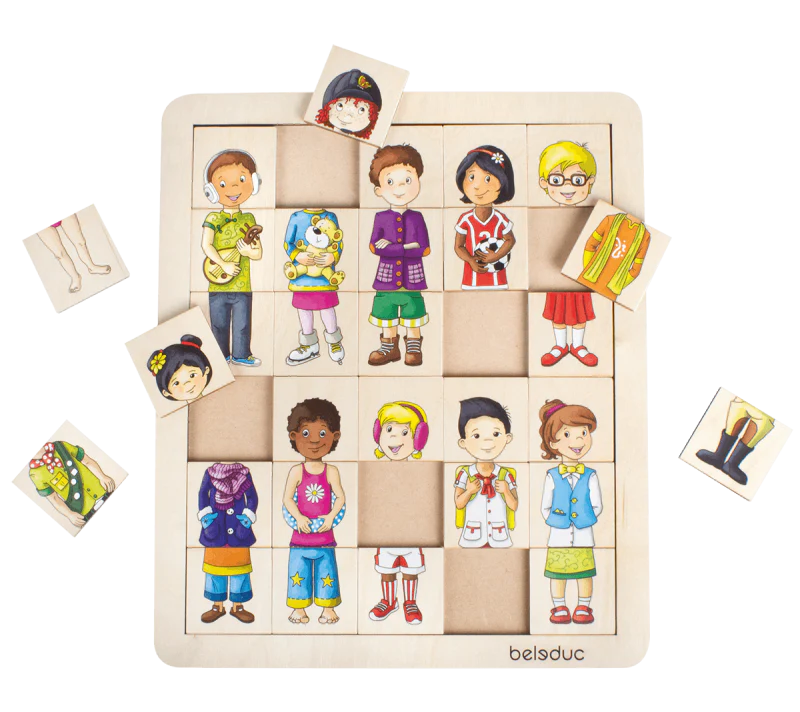
Discover, name and understand emotions. With the Match & Mix "Emotions" matching puzzle, children can playfully and intuitively learn about emotions. They create figures from three tiles. Each figure shows a different emotion, which is expressed in the facial expression and body language: joy, surprise, disgust, anger, fear and sadness.
With an attentive eye, children recognise the small and large differences between the emotions. They discover which combinations strengthen the expression and which are perhaps less suitable. Matching emotion smileys on the reverse side also help with categorisation.
Imaginative figures can also be created when doing the puzzle - this stimulates creativity as well as the exploration of emotions. The puzzle invites children to talk about emotions, promotes empathy and the development of vocabulary, perception and fine motor skills.
Ages 4 and up.
With an attentive eye, children recognise the small and large differences between the emotions. They discover which combinations strengthen the expression and which are perhaps less suitable. Matching emotion smileys on the reverse side also help with categorisation.
Imaginative figures can also be created when doing the puzzle - this stimulates creativity as well as the exploration of emotions. The puzzle invites children to talk about emotions, promotes empathy and the development of vocabulary, perception and fine motor skills.
Ages 4 and up.
Discover, name and understand emotions. With the Match & Mix "Emotions" matching puzzle, children can playfully and intuitively learn about emotions. They create figures from three tiles. Each figure shows a different emotion, which is expressed in the facial expression and body language: joy, surprise, disgust, anger, fear and sadness.
With an attentive eye, children recognise the small and large differences between the emotions. They discover which combinations strengthen the expression and which are perhaps less suitable. Matching emotion smileys on the reverse side also help with categorisation.
Imaginative figures can also be created when doing the puzzle - this stimulates creativity as well as the exploration of emotions. The puzzle invites children to talk about emotions, promotes empathy and the development of vocabulary, perception and fine motor skills.
Ages 4 and up.
With an attentive eye, children recognise the small and large differences between the emotions. They discover which combinations strengthen the expression and which are perhaps less suitable. Matching emotion smileys on the reverse side also help with categorisation.
Imaginative figures can also be created when doing the puzzle - this stimulates creativity as well as the exploration of emotions. The puzzle invites children to talk about emotions, promotes empathy and the development of vocabulary, perception and fine motor skills.
Ages 4 and up.
$5.95
Original: $19.82
-70%Match & Mix Emotions—
$19.82
$5.95Description
Discover, name and understand emotions. With the Match & Mix "Emotions" matching puzzle, children can playfully and intuitively learn about emotions. They create figures from three tiles. Each figure shows a different emotion, which is expressed in the facial expression and body language: joy, surprise, disgust, anger, fear and sadness.
With an attentive eye, children recognise the small and large differences between the emotions. They discover which combinations strengthen the expression and which are perhaps less suitable. Matching emotion smileys on the reverse side also help with categorisation.
Imaginative figures can also be created when doing the puzzle - this stimulates creativity as well as the exploration of emotions. The puzzle invites children to talk about emotions, promotes empathy and the development of vocabulary, perception and fine motor skills.
Ages 4 and up.
With an attentive eye, children recognise the small and large differences between the emotions. They discover which combinations strengthen the expression and which are perhaps less suitable. Matching emotion smileys on the reverse side also help with categorisation.
Imaginative figures can also be created when doing the puzzle - this stimulates creativity as well as the exploration of emotions. The puzzle invites children to talk about emotions, promotes empathy and the development of vocabulary, perception and fine motor skills.
Ages 4 and up.